
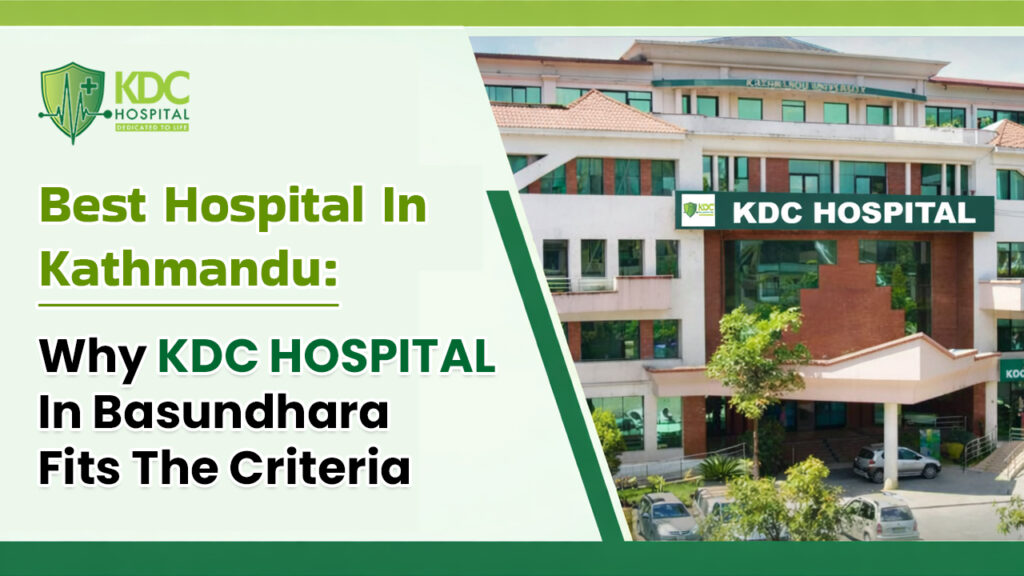
If you’re searching for the Best Hospital in Kathmandu, you’re not looking for a pretty lobby, you’re looking for a hospital that can diagnose accurately, treat safely, and respond fast when things get serious. That’s especially true when you need a trusted hospital in Kathmandu, a reliable hospital in Nepal, or a convenient hospital around Basundhara for your family.
This guide gives you a practical, evidence-led framework to compare hospitals in Kathmandu and shows how KDC Hospital’s publicly stated services (emergency, ICU, diagnostics, OT, sterilization systems, specialists) align with what “best” should mean in real healthcare decisions.
The best hospital in Kathmandu is the one that consistently delivers safe, effective, timely, and people-centered care, supported by reliable emergency services, qualified specialists, accurate diagnostics, strong infection prevention, and transparent clinical processes. In healthcare, “best” is measured by system reliability and reduced preventable harm not marketing.
What “Best Hospital in Kathmandu” should actually mean
In YMYL healthcare, “best” must map to quality and safety systems because outcomes depend on processes, not slogans. Global patient-safety evidence shows harm can occur in care settings, and many harms are preventable with better systems.
The 6 verifiable pillars of a “best hospital” (Kathmandu checklist)
When comparing any hospital in Kathmandu or hospital in Nepal, prioritize:
- 24/7 emergency readiness (triage + rapid response)
- ICU capability and escalation pathways
- Accurate diagnostics (lab + imaging) with fast turnaround
- Qualified specialists with published availability
- Infection prevention + sterilization (CSSD/sterile supply workflows)
- Transparent communication (consent, costs, discharge plan)
“Hospitals don’t become ‘best’ by claiming excellence, they become best by designing systems that deliver the same safe care at 2 PM and 2 AM.”
What most people miss: “quiet” systems beat “visible” claims
Many hospitals advertise departments; fewer can show the behind-the-scenes systems that protect patients:
- sterilization workflows (CSSD),
- emergency drills and training culture,
- standardized documentation and discharge planning.
Section summary (extractable)
- “Best hospital” = system reliability + safety + speed.
- Verify emergency, ICU, diagnostics, specialist schedules, and sterilization systems before you trust branding.
How to choose the Best Hospital in Kathmandu (7-step process you can use today)
Use this when evaluating a hospital around Basundhara, a hospital in Kathmandu, or any top “best hospital” list.
Step 1: Start with the scenario you’re solving
- Emergency/trauma? You need 24/7 emergency + escalation.
- Surgery/procedure? You need OT + sterilization systems + post-op monitoring.
- Chronic disease? You need internal medicine + diagnostics + follow-up workflow.
- Pregnancy/maternity? You need maternity + emergency + neonatal support pathways.
Step 2: Confirm 24/7 Emergency (don’t assume)
Ask:
- Is an emergency available 24 hours?
- Is there an on-site team trained to handle trauma?
KDC publicly states 24/7 Emergency Team and trauma handling capability.
Step 3: Confirm ICU support (even if you’re coming for OPD)
Complications can occur unexpectedly. A hospital that’s truly “best” has ICU-level monitoring and escalation readiness.
KDC lists ICU among its general health services.
Step 4: Validate diagnostics (lab + radiology)
Speed and accuracy reduce misdiagnosis and treatment delays. Look for:
- fully automated lab,
- radiology services,
- ultrasound, X-ray, ECG/ECHO where appropriate.
KDC states a fully automated laboratory and radiology unit and lists diagnostics like digital X-ray, ECG/Echocardiography, ultrasonography with color doppler, endoscopy/colonoscopy.
Step 5: Ask about sterilization (CSSD) and infection control
For surgery/endoscopy and procedures, sterilization is a top safety determinant.
KDC describes a CSSD (Central Sterilization and Supplies Department) for cleaning, disinfecting, sterilizing, storing, and supplying instruments.
Step 6: Verify specialists and schedules (not just names)
The best hospitals publish:
- doctor list,
- departments,
- OPD availability.
KDC publishes an Our Doctors page listing doctors and departments.
Step 7: Check transparency and continuity (the “after” matters)
A “best hospital” has strong discharge planning:
- clear medication instructions,
- follow-up schedule,
- red-flag symptoms explained.
Section summary
- Choose based on: Emergency + ICU + Diagnostics + Sterilization + Specialists + Transparency.
- A hospital is only “best” if it’s dependable across the full patient journey.

Comparison tables (make the decision faster)
Table 1: What kind of hospital do you need in Kathmandu?
| Your need | Best-fit hospital type | What to verify |
| Emergency, trauma, severe breathing issue | 24/7 emergency-capable hospital | Triage speed, ICU backup, ambulance |
| Surgery/procedure | Hospital with OT + CSSD | Sterilization workflow, post-op monitoring |
| Chronic illness (BP, diabetes, thyroid) | Multispecialty hospital | Internal medicine, diagnostics, follow-up |
| Imaging/labs | Hospital with automated lab + radiology | Reporting quality, clinician review |
Table 2: “Best Hospital in Kathmandu” evaluation matrix
| Criteria | Strong signal | Weak signal |
| Emergency | 24/7 emergency team + trauma readiness | Limited hours or unclear response |
| ICU | ICU present + escalation pathway | No ICU / unclear transfer plan |
| Diagnostics | Automated lab + radiology + key tests onsite | Frequent outsourcing + delays |
| Sterilization | Dedicated CSSD | Sterilization not clearly described |
| Specialists | Published doctors list + departments | Names without availability |
| Continuity | Discharge plan + follow-up process | No structured follow-up |
Why KDC Hospital is a strong match for “Best Hospital in Kathmandu” searches
People often refine “best” searches with convenience: hospital around Basundhara. Location matters, but only after safety systems are validated.
1) Location advantage: Basundhara/Dhapasi on Ring Road
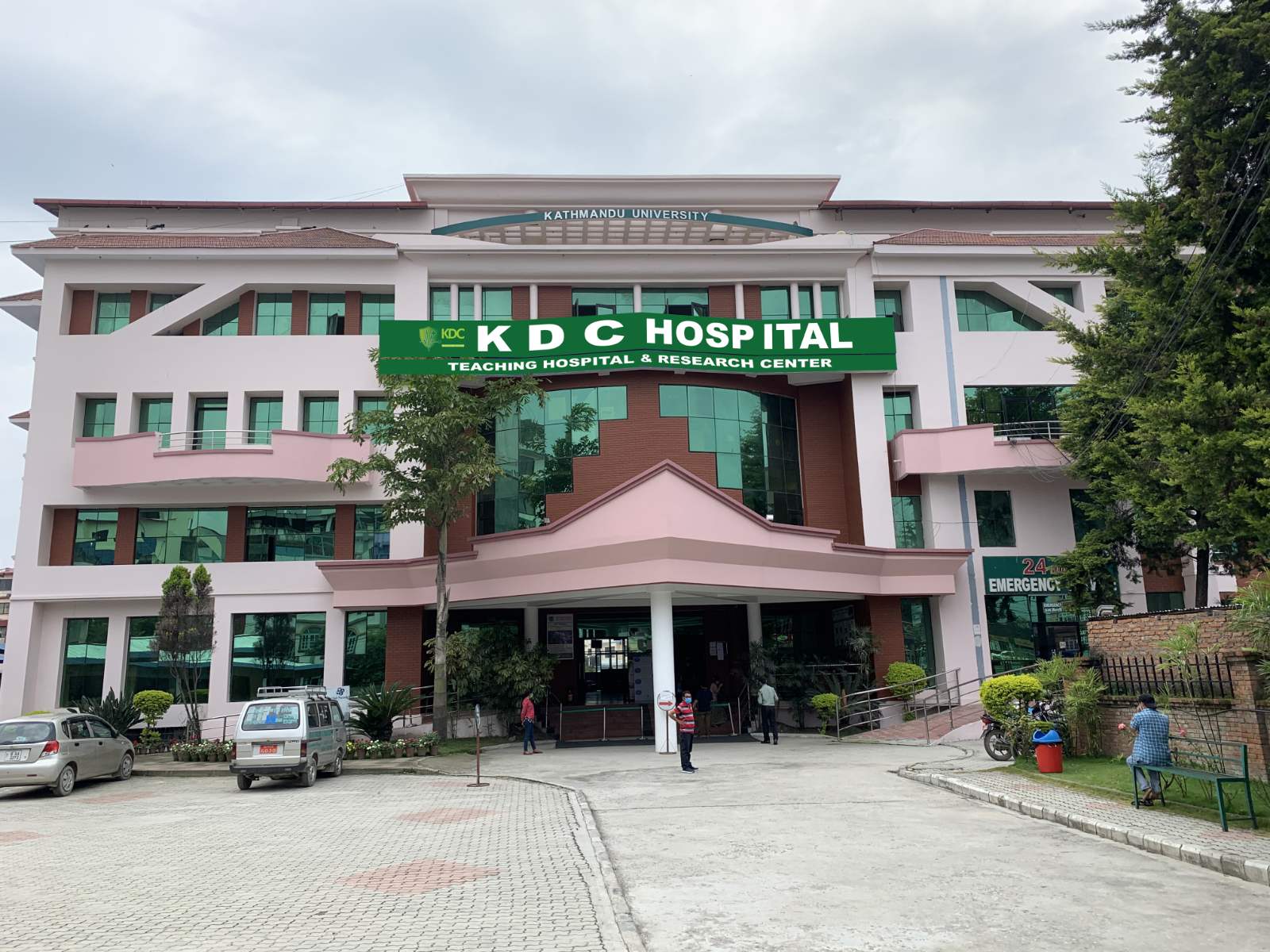
KDC Hospital is listed at Dhapasi, Basundhara (Near Police Beat), Ring Road, Kathmandu-3, and the hospital says it’s accessible from across the valley.
This directly matches intent for “near me” variants like:
- hospital around basundhara
- hospital in kathmandu ring road
- emergency hospital basundhara
2) Core hospital capabilities under one roof
KDC lists key infrastructure and services that correlate with “best hospital” decision factors:
- 24-hours Emergency
- Inpatient (100-bedded)
- ICU
- Operation Theatre
- Ambulance
- Physiotherapy
- Broad OPD specialties + diagnostics
“The best hospitals reduce ‘hidden friction’: repeated visits, scattered diagnostics, referral delays. One-roof capability is not convenience, it’s clinical speed.”
3) Experience + scale (publicly stated)
KDC’s About page states:
- service journey beginning 1997; hospital operational 2015
- 50+ consultants with 25+ years of collective experience
- 5000+ minor and major surgical procedures using advanced equipment
These are meaningful because repetition and experience often improve process maturity: better OT workflows, faster triage routines, and stronger clinical escalation habits.
4) “Quiet safety” differentiator: CSSD sterilization department
KDC describes CSSD operations (cleaning, disinfecting, sterilizing, storing instruments).
For patients comparing hospital in Nepal options, this is one of the strongest behind-the-scenes trust signals for procedural safety.
Section summary
- KDC aligns with “best hospital in Kathmandu” criteria through location + 24/7 emergency + ICU + OT + diagnostics + CSSD + published doctor listings

What a “best hospital experience” should look like (patient journey)
1) OPD visit: direct answers first, details second
A strong OPD visit should quickly clarify:
- what’s most likely,
- what’s dangerous and must be ruled out,
- what the plan is today.
AEO-ready micro-summary:
Good hospitals answer the key question first (“what do you think this is?”), then explain the why, then give next steps.
2) Diagnostics: fast and clinically connected
The best hospitals don’t just run tests, they interpret them in context.
KDC highlights automated lab/radiology and lists diagnostic services such as ECG/ECHO and imaging.
3) Treatment plan: practical, not vague
Expect:
- medication plan,
- lifestyle guidance,
- warning signs,
- follow-up timeline.
4) Admission / surgery pathway (if needed)
A safe pathway includes:
- consent discussion,
- sterile instrument workflows (CSSD),
- monitoring and discharge criteria.
KDC references both surgical capacity and CSSD.
Section bullet summary
- Best hospitals run predictable processes: triage → diagnose → treat → monitor → discharge + follow-up.
- You should never leave without understanding the plan and red flags.
Related keywords you should naturally cover (and what they mean in real life)
To match real search language (and help AI Overviews cite clear chunks), your content should address:
- multispecialty hospital in Kathmandu
- 24/7 emergency hospital in Kathmandu
- ICU hospital in Kathmandu
- surgery hospital in Kathmandu
- diagnostic center in Kathmandu
- OPD services in Kathmandu
- ambulance service in Kathmandu
- maternity hospital in Kathmandu (if applicable to your service pages/social posts)
- physiotherapy in Kathmandu
- ring road hospital Kathmandu
KDC’s service list includes emergency, ICU, OT, ambulance, physiotherapy, OPD specialties, and diagnostics so these semantic variations fit naturally without stuffing.
FAQ
1) What makes the best hospital in Kathmandu?
The best hospital in Kathmandu consistently delivers safe, timely care through 24/7 emergency readiness, ICU support, accurate diagnostics, qualified specialists, strong sterilization/infection control, and transparent communication. It’s measured by reliability and outcomes, not marketing.
2) Is KDC Hospital a good option for people searching “hospital around Basundhara”?
KDC Hospital is listed at Dhapasi, Basundhara (Near Police Beat), Ring Road, Kathmandu-3, which matches “around Basundhara” intent and is described as accessible across the valley.
3) Does KDC Hospital have 24/7 emergency services?
KDC’s public information indicates a 24-hours emergency and provides contact numbers for emergency support.
4) Does KDC Hospital provide ICU care?
KDC lists ICU among its general health services, along with inpatient and operation theatre services.
5) What diagnostic services are available at KDC Hospital?
KDC lists diagnostics such as digital X-ray, ECG/Echocardiography, ultrasonography with color doppler, and endoscopy/colonoscopy, and also states it has a fully automated lab and radiology unit.
6) What is CSSD and why does it matter in a hospital?
CSSD (Central Sterile Supply Department) is where instruments are cleaned, disinfected, sterilized, stored, and supplied. It matters because sterilization quality is a major safety factor for surgeries and procedures. KDC describes having CSSD services.
Actionable conclusion (what to do next)
If you’re trying to choose the Best Hospital in Kathmandu, decide like a strategist: verify systems first, then convenience.
Quick decision checklist
- Confirm 24/7 emergency + ICU backup
- Confirm diagnostics: lab + radiology on-site
- Verify OT + sterilization (CSSD) if procedures are possible
- Check doctor list and OPD availability
- Choose a location that reduces delays (Basundhara/Ring Road access helps)
Why KDC Hospital fits the “best hospital in Kathmandu” framework
KDC publicly lists: Basundhara/Dhapasi Ring Road location, 24-hour emergency, ICU, OT, ambulance, diagnostics, CSSD sterilization, and a published doctors list plus stated track record and surgical volume.