
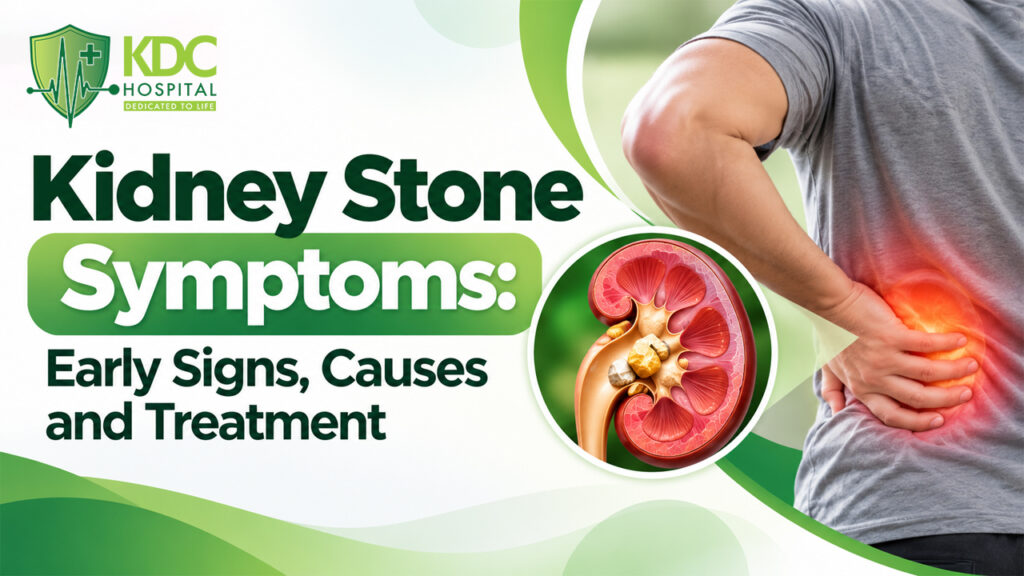
Kidney stones can develop without causing any noticeable discomfort. But when a stone moves into the tube connecting the kidney to the bladder, it can cause sudden, intense pain that may be difficult to ignore.
Common kidney stone symptoms include sharp pain in the back or side, pain spreading toward the lower abdomen or groin, blood in the urine, frequent urination, burning during urination, nausea and vomiting. Some people experience only mild symptoms, while others have severe episodes of pain.
Not everyone with a kidney stone has the same symptoms. The stone’s size, location, movement and effect on urine flow can all influence how a person feels.
Recognizing possible kidney stone symptoms is important, especially when pain is accompanied by fever, chills or difficulty passing urine. These warning signs may indicate a condition requiring urgent medical attention.
This guide explains the early signs of kidney stones, why they form, how doctors diagnose them and the treatment options available to patients in Nepal.
What Are Kidney Stones?
Kidney stones are hard deposits that form when certain substances in urine become concentrated and crystallize.
These substances may include calcium, oxalate, phosphate and uric acid. Over time, crystals can grow and form a stone.
Kidney stones are also called renal calculi or nephrolithiasis. In Nepali, they are commonly known as मिर्गौलाको पत्थरी.
The urinary system consists of two kidneys, two ureters, the bladder and the urethra.
The kidneys filter blood and produce urine. Urine travels from each kidney through a narrow tube called the ureter and is stored in the bladder before leaving the body through the urethra.
A stone can remain inside the kidney or enter the ureter. When it becomes lodged in the ureter, it may interfere with urine drainage and cause significant pain.
According to the National Institute of Diabetes and Digestive and Kidney Diseases (NIDDK), stones vary in their size, composition and effects on the urinary system.
Some stones pass naturally, while others require medical treatment.
What Are the Early Symptoms of Kidney Stones?
There is no single symptom that always appears first.
A small stone may cause no symptoms at all. In some people, the first noticeable sign is sudden flank pain rather than a gradual warning.
Common symptoms include the following.
1. Pain in the Lower Back or Side
Pain in the side of the body, between the ribs and hip, is one of the most recognizable kidney stone symptoms.
This area is known as the flank.
The pain may begin suddenly and can become intense when a stone obstructs part of the urinary tract.
It is often felt on one side of the body, depending on which kidney or ureter is affected.
However, ordinary back pain does not necessarily indicate a kidney stone. Muscular pain, spinal conditions and other illnesses can cause discomfort in a similar area.
2. Pain That Moves Toward the Abdomen or Groin
As a stone travels down the ureter, the location of the pain can change.
Pain may spread from the side or back toward the lower abdomen, groin or genital region.
This is commonly associated with a ureteral stone and may provide a clue about where the stone is located.
The movement of pain does not confirm that the stone is passing safely or that obstruction has resolved.
3. Blood in the Urine
Blood in the urine is called hematuria.
A kidney stone can irritate the lining of the urinary tract, causing bleeding.
Urine may appear pink, red or brown. Sometimes, blood is present in an amount too small to see and is detected only through a laboratory urine test.
Blood in the urine can also occur with urinary infections, bladder conditions and other diseases.
For this reason, visible or laboratory-confirmed hematuria should be evaluated rather than automatically attributed to kidney stones.
4. Frequent Urination
A stone near the lower end of the ureter may irritate the urinary system and cause a frequent need to urinate.
A person might feel the urge to visit the toilet repeatedly, even when little urine is passed.
Frequent urination can also occur with urinary tract infections, diabetes and other conditions.
Additional symptoms and examination findings help distinguish the cause.
5. Burning or Pain While Urinating
Some people with urinary stones experience pain or burning when passing urine, known as dysuria.
This can occur when a stone is close to the bladder or moves through the lower urinary tract.
However, burning urination is also a common symptom of urinary tract infection.
Because infection and stones can occur together, professional assessment is important when symptoms persist or are accompanied by fever.
6. Nausea and Vomiting
Kidney stones can trigger nausea or vomiting, particularly during episodes of severe renal colic.
These symptoms may occur alongside intense back, side or abdominal pain.
Repeated vomiting is especially concerning because a person can become dehydrated or be unable to take medication or fluids.
Persistent vomiting with suspected kidney stone pain warrants prompt medical care.
7. Cloudy or Unpleasant-Smelling Urine
Changes in urine appearance or smell can occur with urinary conditions, including infection.
Cloudy or strong-smelling urine does not by itself prove that a person has a kidney stone.
When combined with fever, painful urination or flank pain, it raises concern for urinary infection and requires medical evaluation.
The NIDDK guide to kidney stone symptoms and causes describes these common symptom patterns and emphasizes the need for assessment.
How Does Kidney Stone Pain Feel?
Kidney stone pain often differs from ordinary muscle strain.
When a stone enters the ureter and interferes with urine drainage, pressure can build up in the urinary system. The ureter may also contract around the obstruction.
This can produce renal colic, a form of intense pain that often rises and falls in waves.
Someone experiencing renal colic may find it difficult to sit comfortably or remain in one position.
The pain may vary in intensity and location as the stone moves.
| Pain characteristic | Possible significance |
|---|---|
| Sudden, intense pain in one flank | May occur with ureteral obstruction |
| Pain spreading toward the groin | Can occur when a stone moves lower in the ureter |
| Pain that rises and falls in waves | Typical pattern of renal colic |
| Mild discomfort without obvious urinary symptoms | May have several causes, including some stones |
| Severe pain with fever or chills | Possible urinary infection with obstruction; emergency assessment required |
Pain severity alone cannot accurately determine the size of a stone.
A relatively small stone lodged in the ureter may cause intense pain, while a larger stone remaining in the kidney may produce few symptoms.
Also, improvement in pain does not always prove that a stone has passed.
Can You Have Kidney Stones Without Symptoms?
Yes. Some kidney stones are discovered incidentally during ultrasound or CT examinations performed for another reason.
These stones may remain inside the kidney without causing noticeable symptoms.
An asymptomatic stone does not automatically require surgery. However, management depends on its size, location, whether it is growing, whether it is associated with infection or obstruction, and the person’s overall kidney health.
A clinician may recommend periodic monitoring rather than immediate intervention.
People should not assume that a stone is harmless simply because it does not hurt.
When Are Kidney Stone Symptoms an Emergency?
Certain symptoms suggest that a kidney stone may be associated with infection, serious obstruction or other complications.
Seek emergency medical care immediately if you have suspected kidney stone symptoms together with fever or chills, inability to urinate, severe illness or uncontrolled pain.
An obstructed urinary system combined with infection can rapidly become dangerous.
The European Association of Urology’s 2026 Urolithiasis Guidelines identify infected urinary obstruction and anuria as urological emergencies.
Urgent treatment may involve antibiotics and drainage of the obstructed kidney using a ureteral stent or nephrostomy.
Other warning signs that require prompt attention
Seek urgent evaluation for:
- Severe pain that does not improve with appropriate treatment.
- Persistent vomiting or inability to keep down fluids.
- Markedly reduced urine output.
- Suspected stones in someone with only one functioning kidney.
- Severe weakness, confusion or other signs of serious illness.
- Significant urinary symptoms during pregnancy.
Do not rely on herbal remedies, forced water intake or delayed appointments when these warning signs are present.
KDC Hospital describes emergency-care services on its website. Patients in Kathmandu can review its emergency medical services information, although anyone experiencing a medical emergency should go to the nearest appropriate emergency department without delay.
Can Kidney Stone Symptoms Be Confused With Other Conditions?
Yes. Kidney stones are not the only cause of back, abdominal or urinary pain.
Urinary Tract Infection
A urinary tract infection may cause burning urination, frequent urination, discomfort and cloudy urine.
Fever and flank pain may suggest a kidney infection.
If a stone is obstructing urine flow at the same time, the combination can require emergency treatment.
Muscle or Spine Problems
Back muscle strain and spinal disorders can cause pain around the lower back.
Musculoskeletal pain may change with movement, posture or pressing on the affected area, although these observations cannot reliably exclude a kidney stone.
Gallbladder Conditions
Gallbladder disease can cause abdominal pain, particularly in the upper right abdomen, sometimes with nausea and vomiting.
A clinical examination helps determine the likely source.
Appendicitis and Other Abdominal Conditions
Appendicitis can cause severe abdominal pain, sometimes with nausea or fever.
Gynecological emergencies, including ectopic pregnancy and ovarian torsion, can also cause sudden abdominal or pelvic pain.
These conditions may require urgent investigation.
The important lesson is that a symptom pattern can suggest kidney stones without proving the diagnosis.
What Causes Kidney Stones?
Kidney stones form when substances in urine become sufficiently concentrated to crystallize.
Several factors can contribute.
Inadequate Fluid Intake
Not drinking enough fluid can result in more concentrated urine, which may encourage stone formation in susceptible people.
Fluid losses from sweating, vomiting or diarrhea can also contribute to dehydration.
In Nepal, people working outdoors, exercising heavily or spending long periods in hot conditions may need particular attention to maintaining appropriate hydration.
However, hydration needs vary, especially for people with heart or kidney disease.
High Sodium Intake
A diet containing excessive sodium may increase urinary calcium excretion and contribute to calcium stone formation.
Common sources include salty packaged snacks, processed foods and heavily salted meals.
Reducing excessive salt can be helpful for stone prevention.
Certain Dietary Patterns
Some individuals may develop stones more readily with diets high in particular substances, such as animal protein or oxalate.
Not everyone with kidney stones needs to avoid the same foods.
Dietary advice should depend on the stone type, urine findings and individual risk factors.
Family and Personal History
People with a family history of kidney stones may have an increased risk of developing them.
Having previously experienced a kidney stone also increases the possibility of future stones.
Medical Conditions
Some conditions can increase stone risk, including gout, certain bowel disorders, recurrent urinary infections and disorders affecting calcium metabolism.
Some medicines can also contribute to stone formation.
A healthcare professional can assess these factors when stones recur or when metabolic abnormalities are suspected.
What Are the Main Types of Kidney Stones?
Kidney stones are classified according to their chemical composition.
Calcium Stones
Calcium-based stones, especially calcium oxalate stones, are the most common type.
They can be associated with several dietary, metabolic and genetic factors.
Having a calcium stone does not automatically mean that dietary calcium should be eliminated.
Uric Acid Stones
Uric acid stones can form when urine is persistently acidic.
They may be associated with certain metabolic conditions and dietary patterns.
Selected uric acid stones can sometimes be dissolved through carefully monitored medication that changes urine acidity.
Struvite Stones
Struvite stones are associated with certain urinary tract infections.
They may become large and can require active management of both the stone and the infection.
Cystine Stones
Cystine stones are associated with cystinuria, an inherited condition that causes excess cystine in the urine.
They require specialist management and long-term prevention measures.
Identifying stone composition can help guide future treatment and prevention.
How Are Kidney Stones Diagnosed?
Doctors diagnose kidney stones by combining symptoms, medical history, physical examination, laboratory investigations and imaging.
The aim is to establish whether a stone is present, where it is located and whether it is affecting urinary drainage or kidney function.
Urine Tests
Urinalysis can detect blood, signs of infection and other abnormalities.
A urine culture may be required if infection is suspected.
Blood in urine supports further investigation but does not independently confirm a stone.
Blood Tests
Blood tests can help assess kidney function and relevant metabolic abnormalities.
Tests may include creatinine and selected electrolyte or mineral measurements.
These findings may influence treatment decisions, especially if obstruction or dehydration is suspected.
Ultrasound
Ultrasound uses sound waves to produce images of internal structures.
It does not expose patients to ionizing radiation and can identify many kidney stones and signs of urinary obstruction.
It is particularly useful in pregnancy and often forms part of the initial evaluation.
However, ultrasound can miss some stones, especially smaller ureteral stones.
Non-Contrast CT Scan
A non-contrast CT scan can provide detailed information about a stone’s size, location and effects on surrounding structures.
It may also help identify an alternative explanation for abdominal or flank pain.
According to the NICE guideline on renal and ureteric stones, low-dose non-contrast CT is recommended urgently for adults with suspected renal colic, while ultrasound is preferred during pregnancy and is first-line for children.
The final imaging choice depends on the patient’s condition and the treating clinician’s judgment.
Stone Analysis
If a stone passes or is removed during a procedure, laboratory analysis can help identify its composition.
This is especially useful when planning prevention of future stones.
Learn more from the NIDDK guide to kidney stone diagnosis.
Can Kidney Stones Pass Without Surgery?
Yes. Some smaller, uncomplicated urinary stones can pass naturally.
The likelihood depends on more than diameter. Stone location, shape, obstruction, symptoms, kidney function and the presence or absence of infection are important.
A doctor may recommend observation when it is medically appropriate.
Conservative Management
Conservative treatment may involve pain management, appropriate fluid intake and scheduled follow-up.
In selected patients, a healthcare professional may prescribe medication to help a ureteral stone pass.
Alpha-blocker medicines may improve passage for certain stones in the lower ureter, particularly stones larger than 5 mm that are still suitable for non-surgical management.
This use requires clinical judgment and may be off-label.
Not every kidney stone can be dissolved with medicine, and drinking excessive water does not reliably force an obstructing stone to pass.
Observation is inappropriate when there is serious infection, uncontrolled pain, threatening obstruction or deterioration in kidney function.
Kidney Stone Treatment Options
If a stone does not pass naturally, or if complications develop, a urologist may recommend active treatment.
Shock Wave Lithotripsy
Shock wave lithotripsy, often called SWL or ESWL, uses focused energy generated outside the body to fragment selected stones.
The pieces may subsequently pass through the urinary tract.
Its suitability depends on stone size, density, position and other clinical factors.
Ureteroscopy and Laser Lithotripsy
Ureteroscopy uses a thin instrument passed through the urinary passage into the ureter.
A urologist can locate the stone and, when appropriate, remove it or break it into smaller pieces using a laser.
The procedure is minimally invasive but still involves instrumentation, anesthesia-related considerations and possible complications.
Retrograde Intrarenal Surgery
Retrograde intrarenal surgery, or RIRS, uses a flexible scope to reach selected stones inside the kidney through the urinary tract.
It may be suitable for certain stones depending on their location, size and complexity.
Percutaneous Nephrolithotomy
Percutaneous nephrolithotomy, or PCNL, involves accessing the kidney through a small tract made through the back.
It is commonly considered for larger or more complex kidney stones.
Each procedure has potential benefits and limitations. No single treatment is best for every patient.
For a more detailed explanation of procedures, indications and cost factors, read KDC Hospital’s existing guide to kidney stone treatment in Nepal.
Treatment descriptions here are general clinical information. Patients should confirm which individual procedures are currently available at their chosen hospital.
How Can You Help Prevent Kidney Stones?
Prevention is particularly important for people who have previously experienced kidney stones.
However, preventive measures should be adapted to the individual and, where known, the stone type.
Maintain Appropriate Hydration
Adequate water intake helps keep urine less concentrated.
The amount needed depends on activity, heat exposure, health conditions and fluid losses.
People who have been advised to restrict fluid intake should not increase it without medical guidance.
Reduce Excessive Salt
Reducing sodium intake can help lower the risk of certain calcium stones.
Consider limiting very salty packaged foods and avoiding unnecessary extra salt in meals.
Maintain Normal Dietary Calcium
Calcium-containing foods do not automatically need to be avoided when a person develops a calcium stone.
Normal dietary calcium intake may help reduce absorption of certain stone-forming substances in the digestive tract.
Do not drastically restrict calcium without professional advice.
Review Protein and Oxalate Intake When Relevant
Some people may benefit from modifying excessive animal-protein intake or certain high-oxalate foods.
These changes should depend on stone composition, dietary adequacy and medical recommendations.
Follow Up After a Kidney Stone
Follow-up is important because the absence of pain does not always confirm that a stone has passed.
A healthcare professional may recommend repeat imaging, urine testing, stone analysis or metabolic evaluation.
The NIDDK kidney stone diet and nutrition guidance explains why hydration, sodium, calcium and other dietary factors need individual consideration.
When Should You Consult a Urologist in Nepal?
If you develop symptoms that could indicate kidney stones, a clinical assessment can help clarify the diagnosis.
A urologist is a specialist who assesses conditions affecting the urinary system and performs stone-removal procedures when required.
People should consider consultation for recurring flank pain, blood in the urine, a previously detected stone, repeated urinary symptoms or concerns about an existing stone.
Emergency warning signs require immediate emergency care rather than a routine appointment.
Kidney Stone Consultation at KDC Hospital, Kathmandu
KDC Hospital’s urology department describes medical, diagnostic and surgical care for urinary conditions, including kidney stones.
The hospital is located at Basundhara, along the Ring Road in Kathmandu.
Its published doctors information identifies Dr. Sujit Poudel in urology. Current specialist schedules, diagnostic access and specific procedures should be confirmed with the hospital.
For a consultation, bringing earlier medical reports can be helpful, including:
- Previous ultrasound or CT reports and images.
- Urine and blood test results.
- A list of current medicines.
- Details of prior kidney stones or procedures.
- Information about when symptoms began and whether they have changed.
This information may assist the clinician in selecting appropriate further tests.
Patients can contact KDC Hospital in Basundhara to confirm consultation arrangements.
Frequently Asked Questions About Kidney Stone Symptoms
What is usually the first sign of a kidney stone?
There is no universal first sign. Some kidney stones produce no symptoms, while others first become noticeable through sudden pain in the side or back. Blood in the urine or urinary discomfort may also occur.
Can kidney stones cause pain in the lower abdomen?
Yes. A stone traveling through the ureter can produce pain that moves from the flank toward the lower abdomen or groin. Other abdominal conditions can cause similar symptoms.
Can a 5 mm kidney stone pass naturally?
Some stones around 5 mm can pass without surgery, particularly depending on their location. However, size alone does not determine whether waiting is safe. A doctor must also consider infection, obstruction, pain and kidney function.
Can kidney stones cause fever?
Fever may occur when a urinary infection is present. Fever or chills together with suspected kidney stone symptoms require urgent assessment because infection with urinary obstruction can be dangerous.
Does kidney stone pain always mean surgery is necessary?
No. Some stones can be monitored or managed medically. Surgery or another procedure may be recommended for persistent obstruction, infection-related complications, uncontrolled symptoms or stones unlikely to pass safely.
Can kidney stones come back after treatment?
Yes. A previous kidney stone increases the risk of another. Appropriate hydration, dietary measures, follow-up and stone-specific prevention can help reduce recurrence risk.
Conclusion
Kidney stone symptoms vary considerably. Some people have no pain, while others experience sudden and severe flank pain, blood in the urine, urinary discomfort, nausea or vomiting.
Recognizing possible symptoms is useful, but a medical examination and appropriate testing are needed to confirm the diagnosis.
Fever, chills, inability to urinate, uncontrolled pain or persistent vomiting with suspected stones require urgent medical attention.
For uncomplicated cases, treatment may involve observation and medication. Other patients may need a procedure selected according to their stone and overall clinical condition.
If you are looking for urological assessment in Kathmandu, learn about KDC Hospital’s urology services or contact the hospital to confirm available appointments.